Friday, 7 August 2015

934 Sir William Ffolkes


Constituency : King's  Lynn  1880-85

Sir  William  took  one  of  the  King's  Lynn  seats from  the  Tories.

William  was  a  baronet , the  grandson  of  a  former  MP  for  Norfolk. He  was  educated  at  Harrow  and  Cambridge. He  stood  for  King's  Lynn  in  1874.  He  was  vice  chairman  of  the  Lynn  and  Fakenham  Railway  Company.

When  the  seat  was  reduced  to  one  member  in  1885 William  lost  by  170  votes.

William  later  became  chairman  of  Norfolk  County  Council.

He  died  in  1912  aged  64.


Thursday, 6 August 2015

933 Jesse Collings


Constituency : Ipswich  1880-86 , Birmingham  Bordesley  1886-1912  ( Liberal  Unionist ) , 1912-8  ( Conservative )

Jesse  took  one  of  the  Ipswich  seats  from  the  Tories.

Jesse  was  the  son  of  a  small  scale  builder  in  Devon. He  was  educated  locally  and  started  work  as  a  shop  assistant  and  worked  his  way  up  to  becoming  a  partner  in  an  ironmongery  firm  in  Birmingham  where  he  came  under  the  influence  of  the  radical  Unitarian  preacher  George  Dawson. He  also  became  a  great  friend  of  Joseph  Chamberlain  and  is  chiefly  remembered  as  his  loyal  lieutenant. He  took  over  the  local  education  committee  and  was  mayor  of  Birmingham  from  1878  to  1879. He  later  managed  the  libraries  and  art  gallery.
In  the  1860s  he  visited  America  to  study  their  school  system  and  subsequently  published  a  pamphlet  on  their  free  , non-denominational  system  which  inspired  the  foundation  in  1869  of  the  National  Education  League of  which  he  became  Secretary.  Jesse's  other  main  concern  was  land  reform. He  supported  a  strike  against  low  pay  by  agricutural  workers  in  the  1870s.He  was  a  friend  of  the agricultural  trade  unionist  Joseph  Arch  and  linked  his  union  to  the  N.E.L. He  advocated  giving  Allotments  and  smallholdings  to  poor  workers  in  rural  areas, a  policy  summed  up  in  the  slogan "Three Acres  and  a  Cow". Chamberlain  incorporated  this  in  his  Radical  Programme  extending  the  idea  to  urban  workers.

Jesse  and  Chamberlain  resided  together  in  London. Jesse  piloted  the  Allotments  Extension  Act  through  Parliament  in  1882. The  following  year  he set  up  the  Allotments  Extension  Association.

In  1886  Jesse's  amendment  to  the  Queen's  Speech  extending  smallholdings  brought  down  the  Salisbury  government  and  ushered  in  Gladstone's  third  ministry. Radicals  saw  it  as  a  sign  that  Gladstone  accepted  at  least  part  of  their  programme . Hartington  led  18  Liberals  to  vote  against  it  and  another  70  abstained.Gladstone  made  him  Parliamentary  Secretary to  the  Local  Government  Board . However  he  followed  Chamberlain  in  opposing  Home  Rule.  He  had  supported  Chamberlain's  plans  for  local  government  reform  in  Ireland.

Churchill  had  intervened  to  stop  the  Conservatives  opposing  him  in  Ipswich   but  Jesse  was  unseated  on  petition  in  1886.  He  was  immediately  re-seated  in  Birmingham  where  Henry  Broadhurst  had  been  chased  out.  Arch  remained  with  Gladstone  and  had  Jesse  kicked  out  of  the  AEA. Jesse  responded  by  setting  up  his  own  Rural  Labourer's  League. In  1887  he  secured  another  Allotments  Act  increasing  the  obligations  on  local  authorities  to  provide  them.

Jesse  served  as  Under  Secretary  of  State  for  the  Home  Office  from  1895 to  1902.

Jesse  backed  Chamberlain  again  on  tariff  reform  believing  that  tariffs  on   imported  food  would  benefit  the  rural  economy. On  one  occasion  he  visited  Devonshire  House  to  try  and  talk  the  duke   around  and  was  physically  escorted  out  of  the  building  by  him.

Jesse  though  still  outside  the  party  had  some  influence  on  the  Liberals'  Small  Holdings  and  Allotments  Act  in  1908.

In  his  later  years  he  became  a  writer. His  works  include  Land  Reform  ( 1906 ), The  Colonization of  Rural  Britain ( 1914  )  and  The  Great  War : Its  Lessons  and  Warnings  ( 1915 ) .  The  latter  envisaged  settling  wounded  soldiers  on  the  land  based  on  the  tragi-comic  idea  that  digging  trenches  would  have  given  them  a  taste  for  the  open  air  life.    

Jesse  stood down  in  1918. He  died  in  1920  aged  89.

Wednesday, 5 August 2015

932 Charles Roundell


Constituency : Grantham  1880-5, Skipton  1892-5

Charles   was  the  other  Liberal  elected  at  Grantham.

Charles  was  the  son  of  a  Yorkshire  minister. He  was  educated  at  Harrow  and  Oxford. He  made  his  name  as  a  cricketer  at  both  places. He  became  a  barrister  in  1857. He  was  part  of  the  Jamaica  Royal  Commission  in  1865. He  became  private  secretary  to  Earl  Spencer  in  Ireland  in  1868. He  stood  for  Clitheroe  in  1868. He  was  a  member  of  the  Friendly  Societies  Commission  in  1871.

Charles  made  a  long  speech  in  favour  of  the  Irish  Land  Bill  in  1880.

Charles  was  a  friend  of  the  artist  Edward  Lear.

He  died  in  1906  aged  78.

Tuesday, 4 August 2015

931 John Mellor


Constituency : Grantham  1880-6,  Sowerby  1892-1904

John   was  one  of  two  victorious  Liberals  at   Grantham   where  the  Tories  had  held  one  of  the  seats.

John  was  a  judge's  son  from  Devonshire. He  was  educated  at  Cambridge. He  married  the  daughter  of  Charles  Paget  former  MP  for  Nottingham. He  became  a  barrister  in  1860  and  in  1878  was  involved  in  the  Whistler  v  Ruskin libel  trial.

Gladstone  made  John  Judge  Advocate  General  in  1886.

John  was  Deputy  Speaker  to  Arthur  Peel  from  1893  to  1895. He  also  sat  on  a  number  of  minor  Royal  Commissions.

John  retired  from  the  Commons  in  1904. He  died  in  1911  aged  76.


Monday, 3 August 2015

930 William Willis


Constituency : Colchester  1880-85

William was  the  other  Liberal  victor  in  Colchester. He  won  by  a  single  vote.

William  was  the  son  of  a  manufacturer  from  Luton. He  was  educated  at  Huddersfield  College  and  the  University  of  London. He  became  a  barrister  in  1861. He  was  a  Baptist  with  a  Puritan  bent  collecting  books  on  Cromwell, Bunyan, Milton  and  Newton. He  could  get  very  aerated  at  Baptist  Union  assemblies  over  purely  historical  issues.

William  was  noted  for  quoting  seventeenth  century  precedents  when  he  put  down  motions. He  would  also  shake  his  fist  when  passing  Lambeth  Palace.

William  later  became  a  county  court  judge.

He  died  in  1911 aged  76.

Sunday, 2 August 2015

929 Richard Causton


Constituency : Colchester  1880-85,  Southwark  West  1888-1910

Richard  was  one  of  two  Liberal  victors  in  Colchester.

Richard  was  the  son  of  a  London  stationer  and  alderman. He  became  a  partner  in  the  family  firm. He  first  contested  Colchester  in  1874.

Richard  was  defeated  in  1885  by  166  votes  and   in 1886.  He  returned  to  Parliament  in  a  by-election  at  Southwark  West  in  1888.

Richard  became  a  whip  in  Gladstone's  last  administration  and  remained  a  Liberal  whip  until  1905. That  year  Campbell-Bannerman  made  him  Paymaster- General.

Richard  gave  a  hand  press  to  the  explorer  Ernest  Shackleton  to  help  him  produce  the  first  book  to  be  printed  in  Antarctica , Aurora  Australis .

Richard  lost  his  seat  in  the  January  1910  election  and  was  made  Baron  Southwark. In  1913  he  was  President  of  the  London  Chamber  of  Commerce.

In  later  years  Richard  was  chairman  of  the  Royal  School  for  the  Blind  at  Leatherhead.

He  died  in  1929  aged  85.


Saturday, 1 August 2015

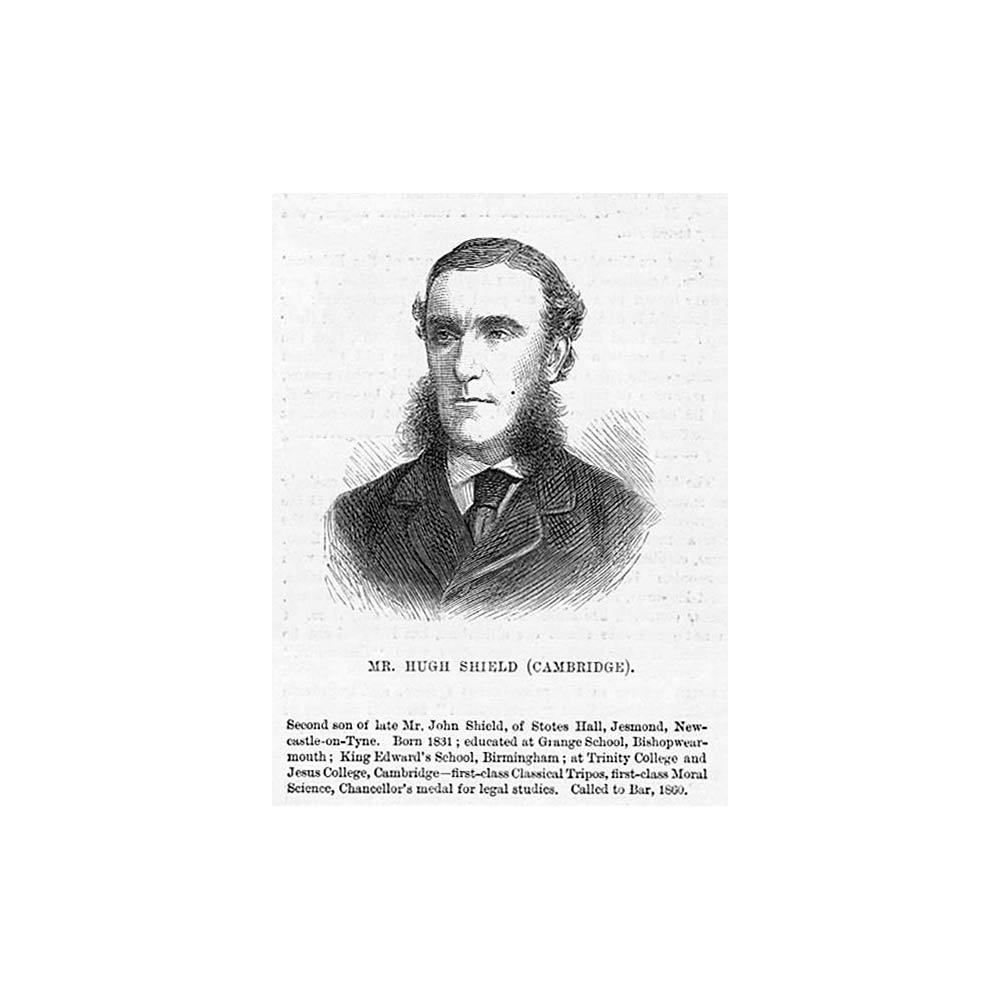
928 Hugh Shield


Constituency : Cambridge  1880-85

Hugh  was  one  of   the  two  Liberal  victors  in  Cambridge  alongside  the  returning  William  Fowler.

Hugh  was  educated  at  Cambridge. He  became  a  barrister  in  1860.

Most  of  Hugh's  parliamentary  contributions  were  about  arcane  matters  of  parliamentary  procedure.

In  1884  Hugh  visited  the  Pope.

He  died  in  1903  aged  72.